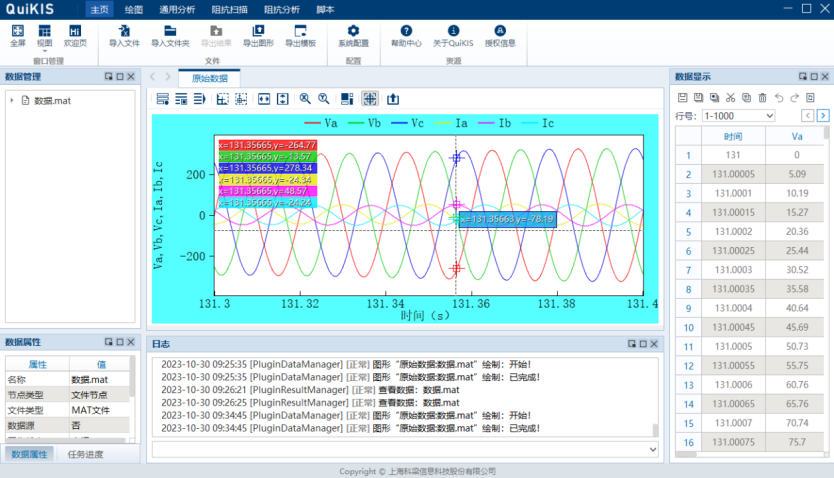
n Data Management
Supports importing, exporting, viewing, plotting, renaming, locating files in explorer, clearing, emptying, and editing data files in CSV, MAT, TXT, and KIS formats. Users can view file attributes (e.g., type, status, path) and detect continuity, duration, and sampling frequency of time-domain data.
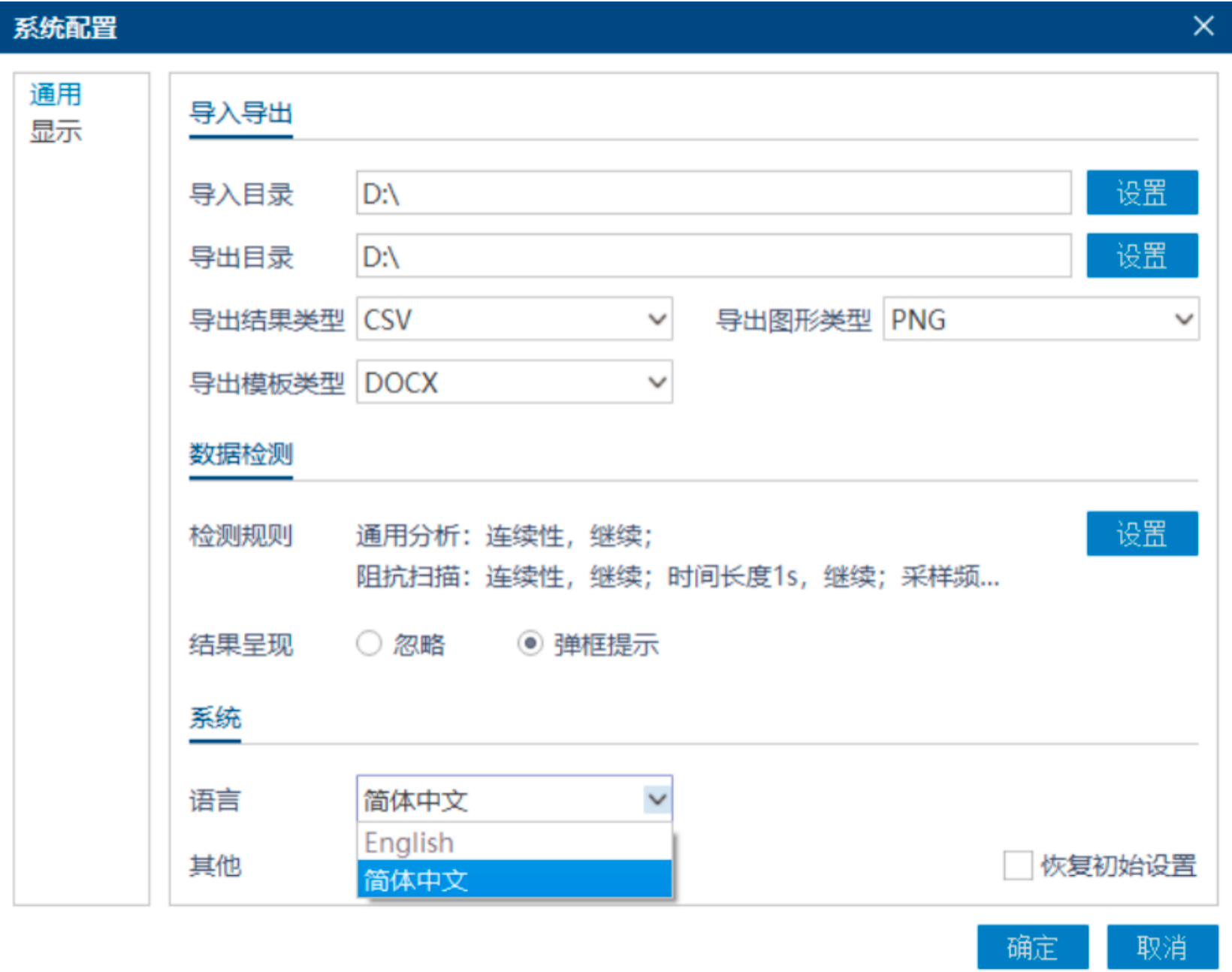 Data Detection
n Graph Editor
Supports display selection, axis zooming, layout, synchronization or alignment operations, mouse point acquisition, cursor/trace addition, shape insertion, min/max value tracking, and export. Properties such as labels, axis range, color, text, legend, grid, line width, line style, transparency, tick values, and subtick values can be configured, and attribute settings can be saved to styles.
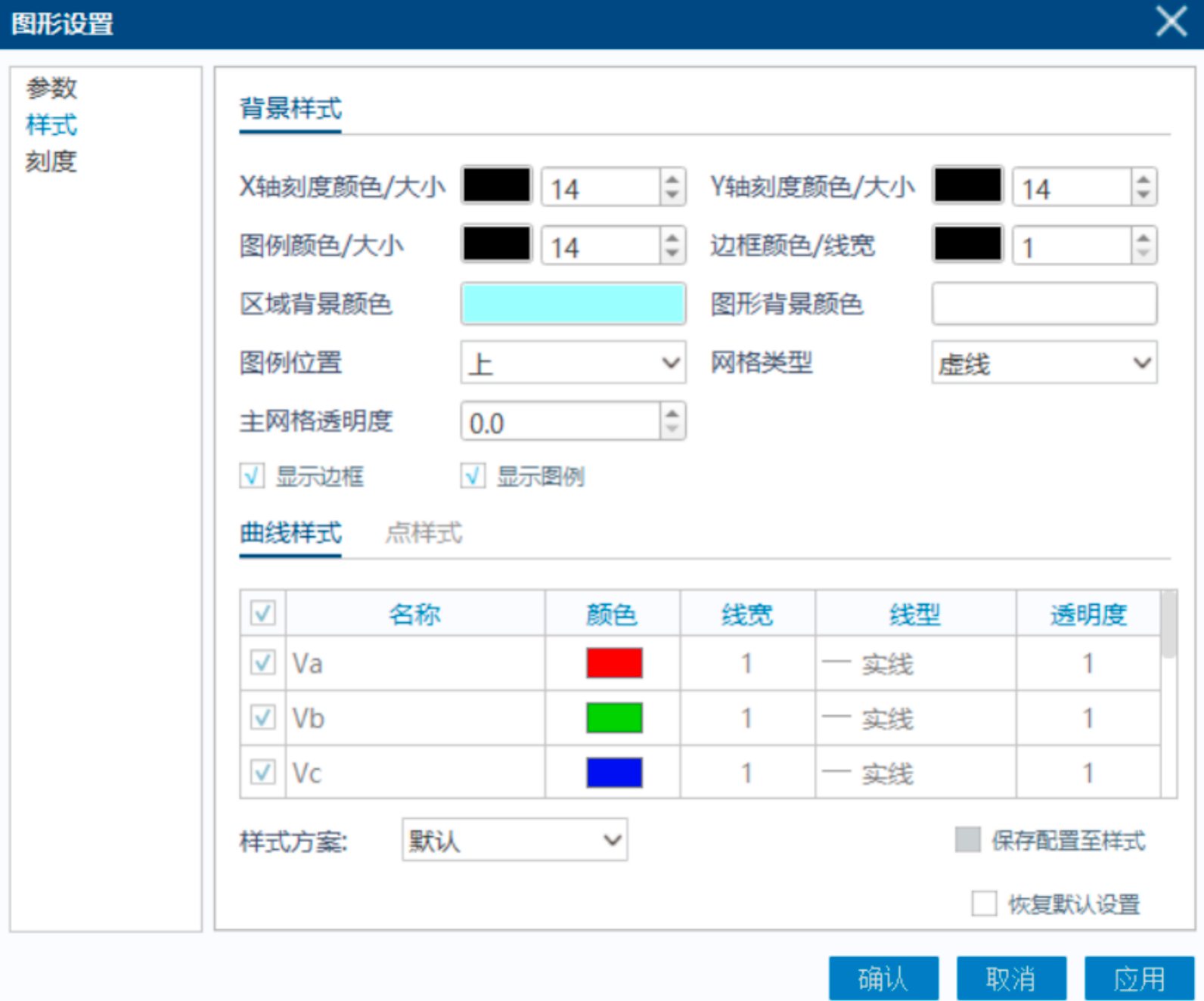
Graphics Settings
n Export Template
By invoking required paper or report templates, users can one-click batch export edited graphics to designated locations in target documents with automated positioning.
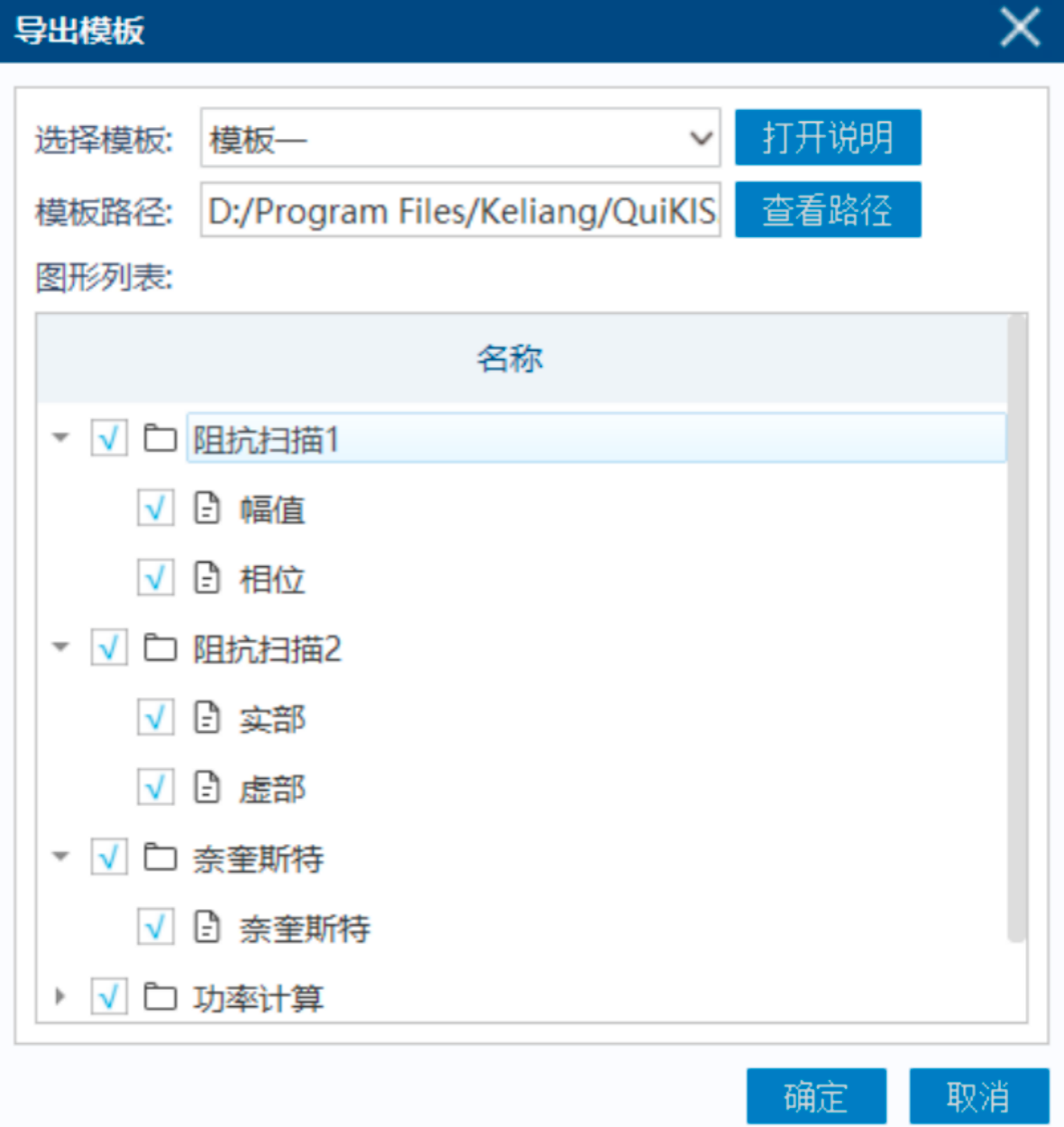
Export Template
n Harmonic Analysis
Phase harmonics and sequence harmonics analysis can be conducted, where the phase harmonics reference signal can be the fundamental wave or direct current. Sequence harmonics include positive sequence, negative sequence, and zero sequence harmonics. The harmonic content can include frequencies below the fundamental frequency. Harmonic amplitude graphs, phase graphs, and fundamental frequency graphs can be plotted.
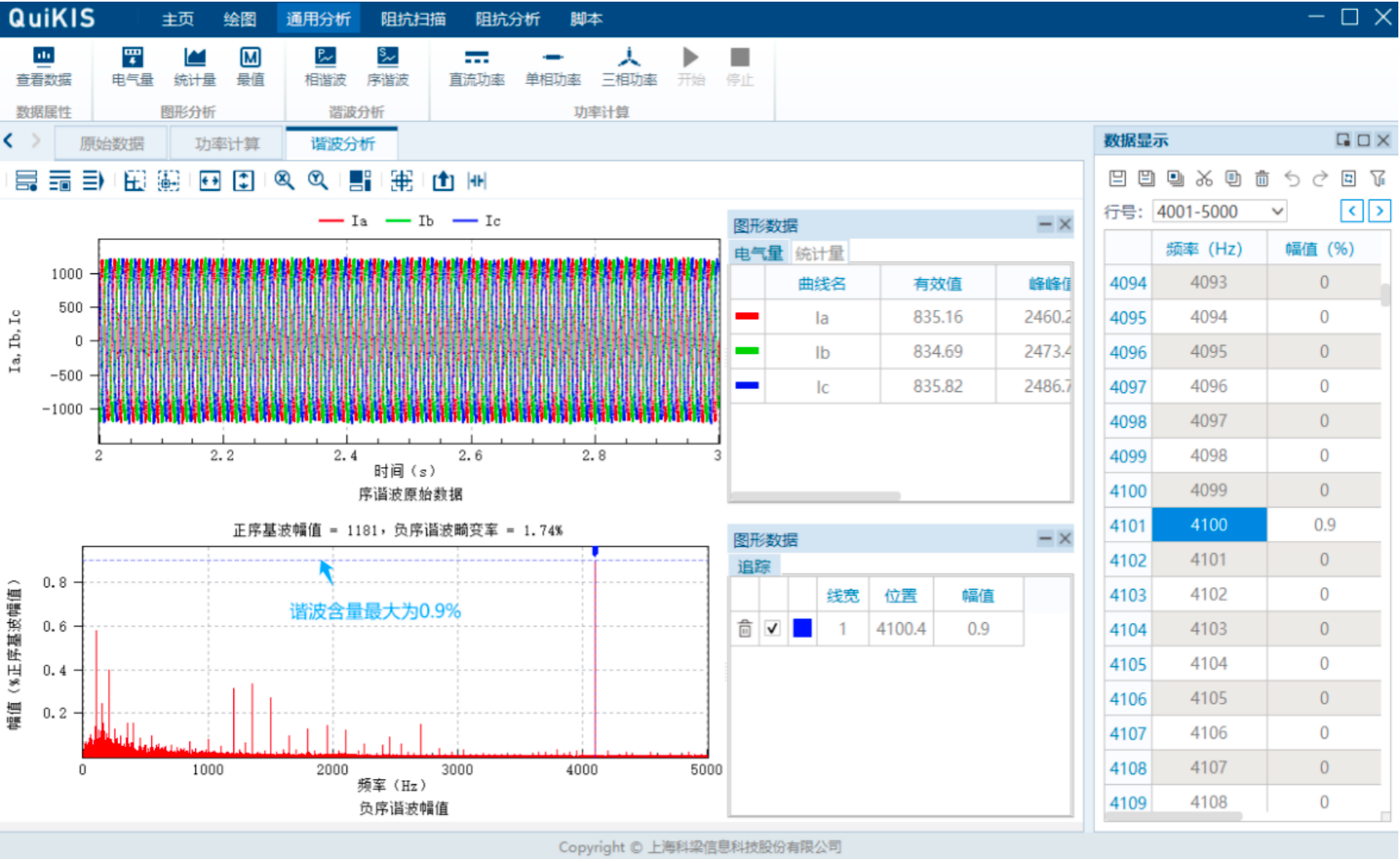
Negative-Sequence Harmonic Analysis
n Power Calculation
Supports DC power, single-phase power, and three-phase power calculations. For single-phase and three-phase power, graphical displays of instantaneous power, active power, reactive power, apparent power, and power factor can be optionally generated. Calculation results support per-unit system normalization.
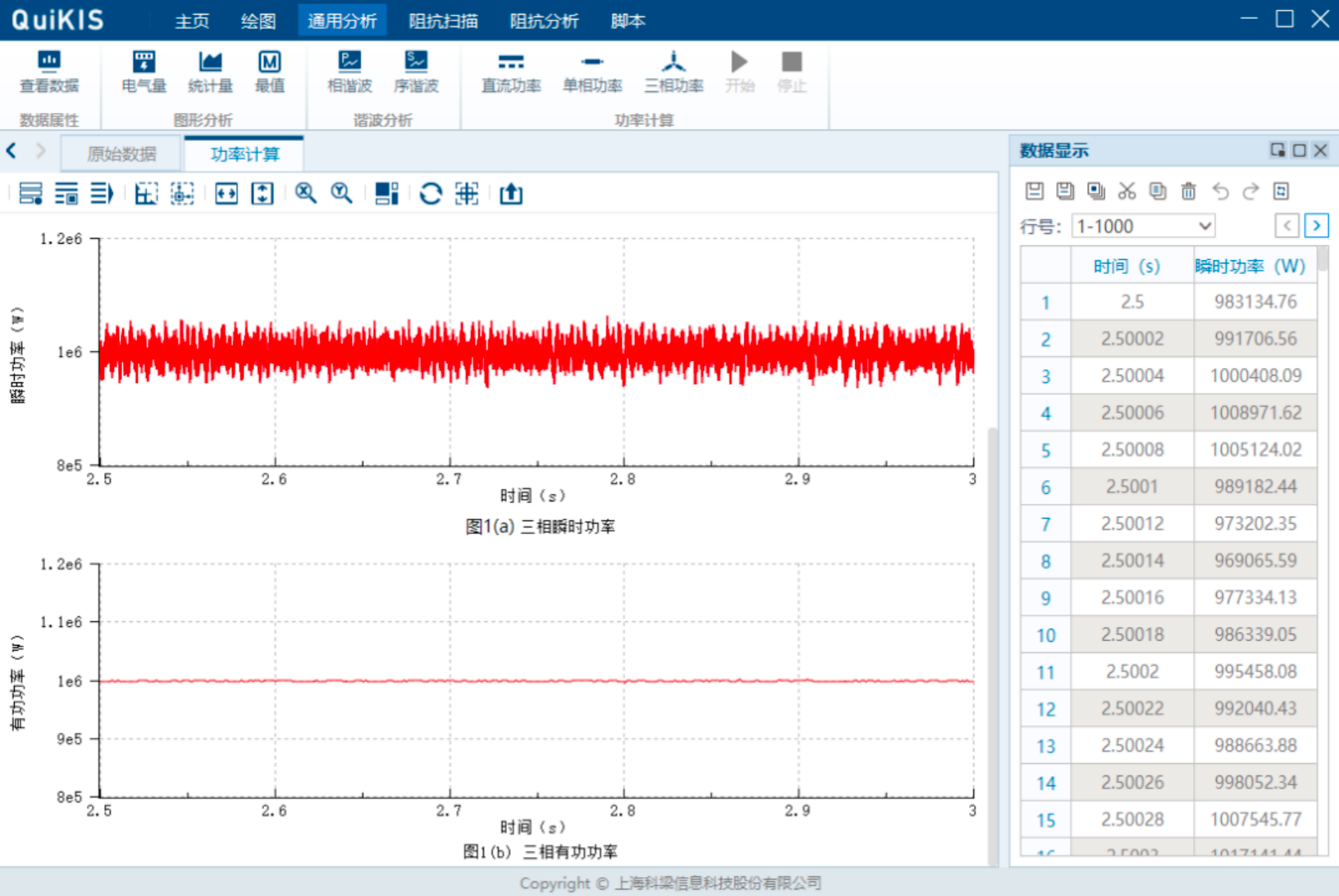
Three-Phase Power Calculation
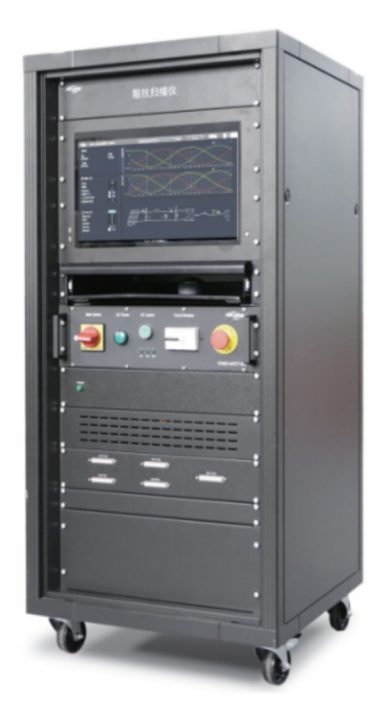
n Impedance/Admittance Scanning
Impedance/Admittance scanning allows configuring the Device Under Test (DUT), disturbance phase sequence, disturbance type, response, sampling voltage, current direction, file type, data parameters, and scanning method for targeted measurements; the results can be visualized as Magnitude Bode Plot, Phase Bode Plot, Real Part-Frequency Plot, Imaginary Part-Frequency Plot, or Nyquist Plot, with support for appending result curves to overlay comparative data.
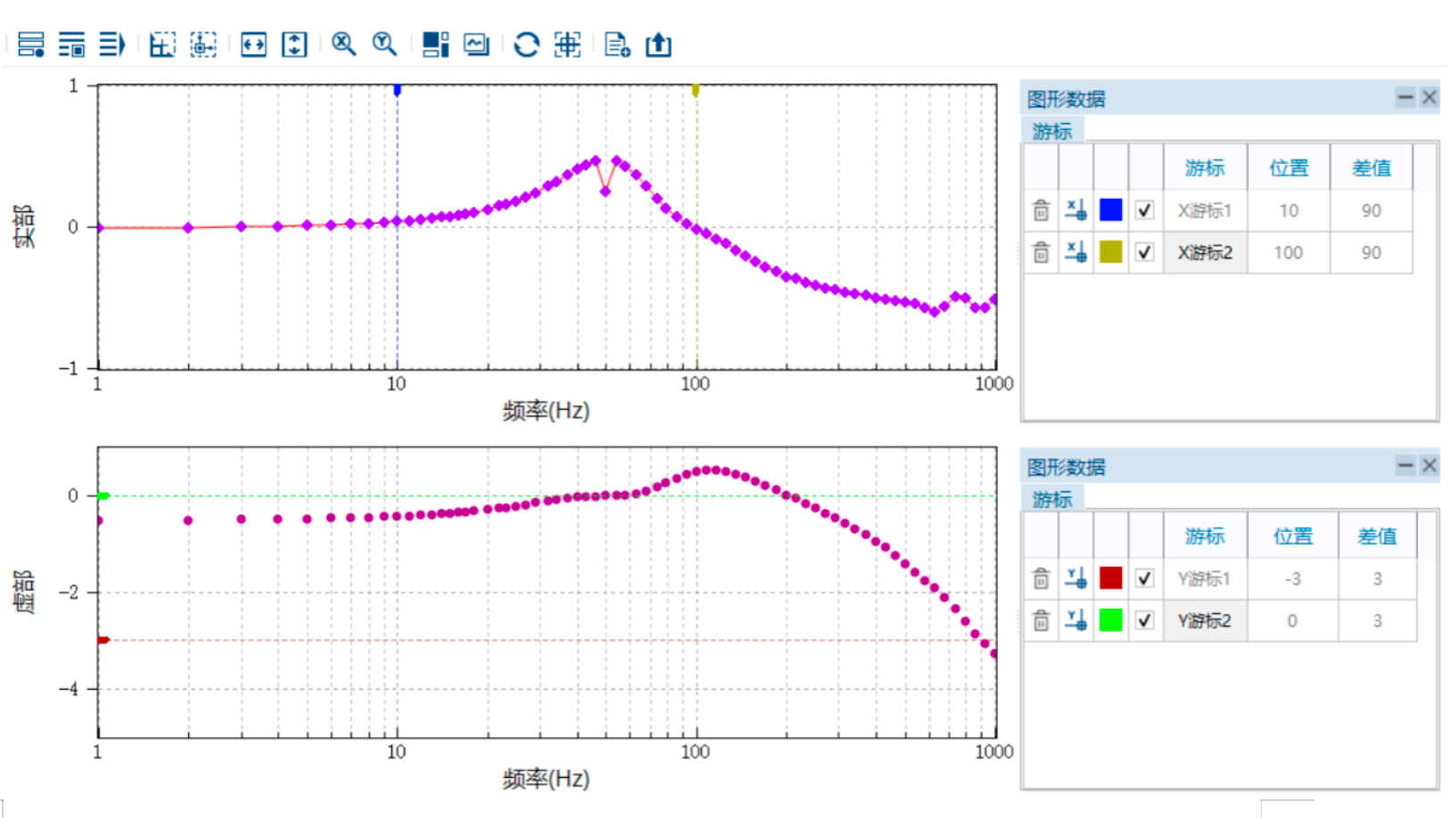
Real Part-Frequency Plot & Imaginary Part-Frequency Plot
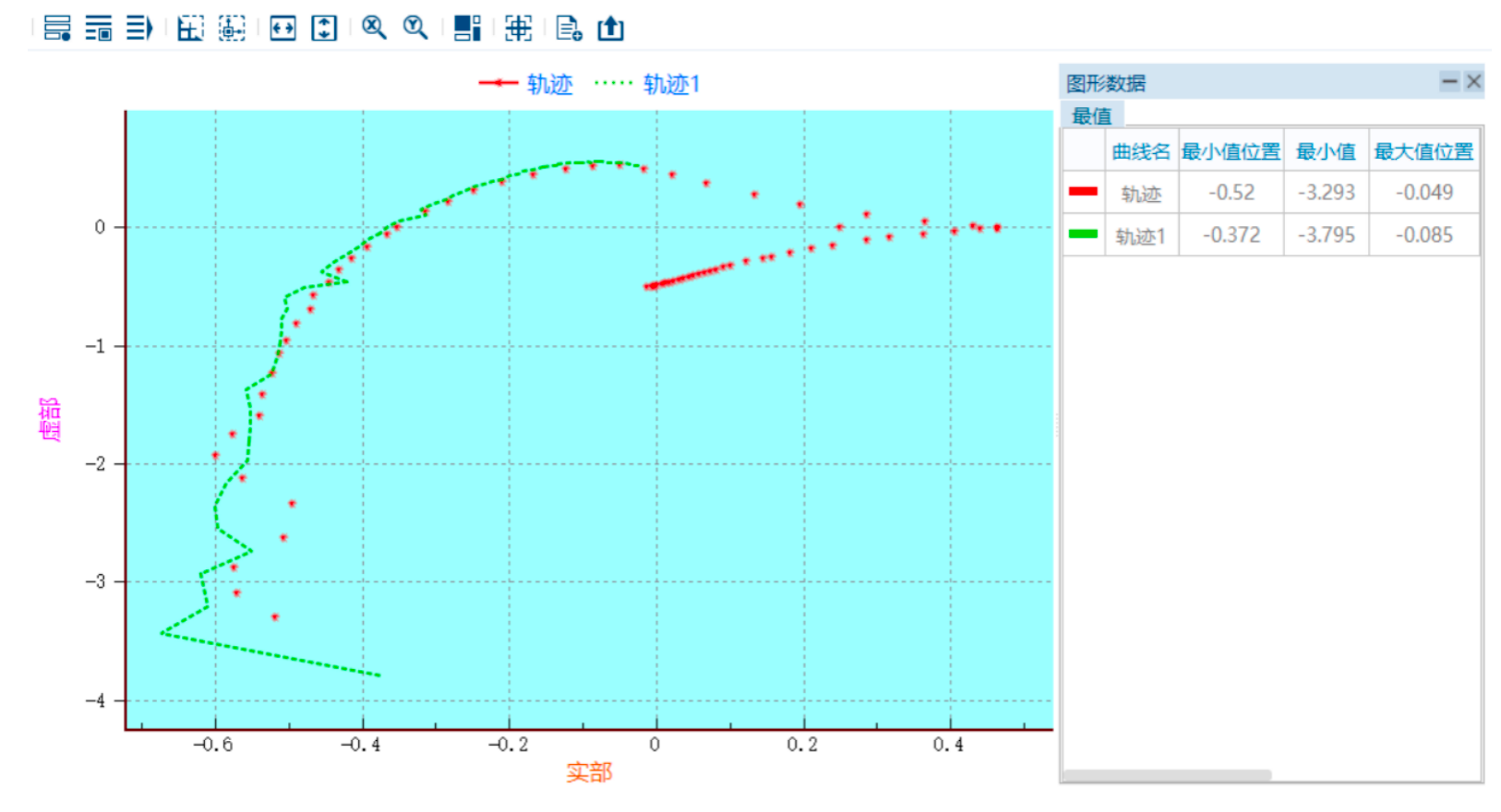
Nyquist Plot
n Impedance/Admittance Data Validation
Accuracy is verified by calculating deviation values of the comparative impedance/admittance data against reference impedance/admittance data. Two sets of comparative impedance/admittance data can be simultaneously selected for validation. The validation results display the maximum magnitude deviation and maximum phase deviation, while generating Bode plots (magnitude and phase) for the reference data, comparative data, and deviation data respectively.
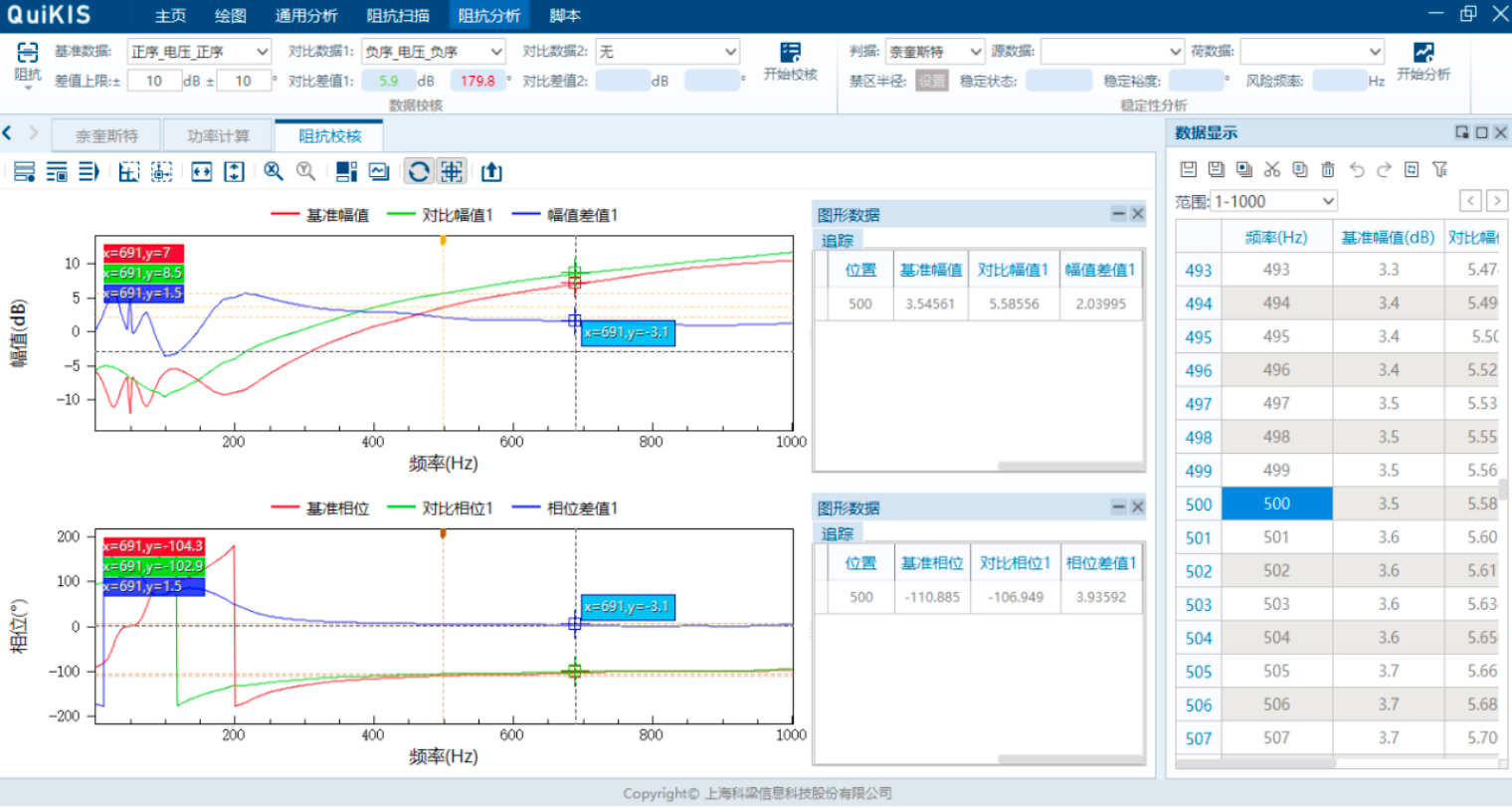
Impedance/Admittance Data Validation
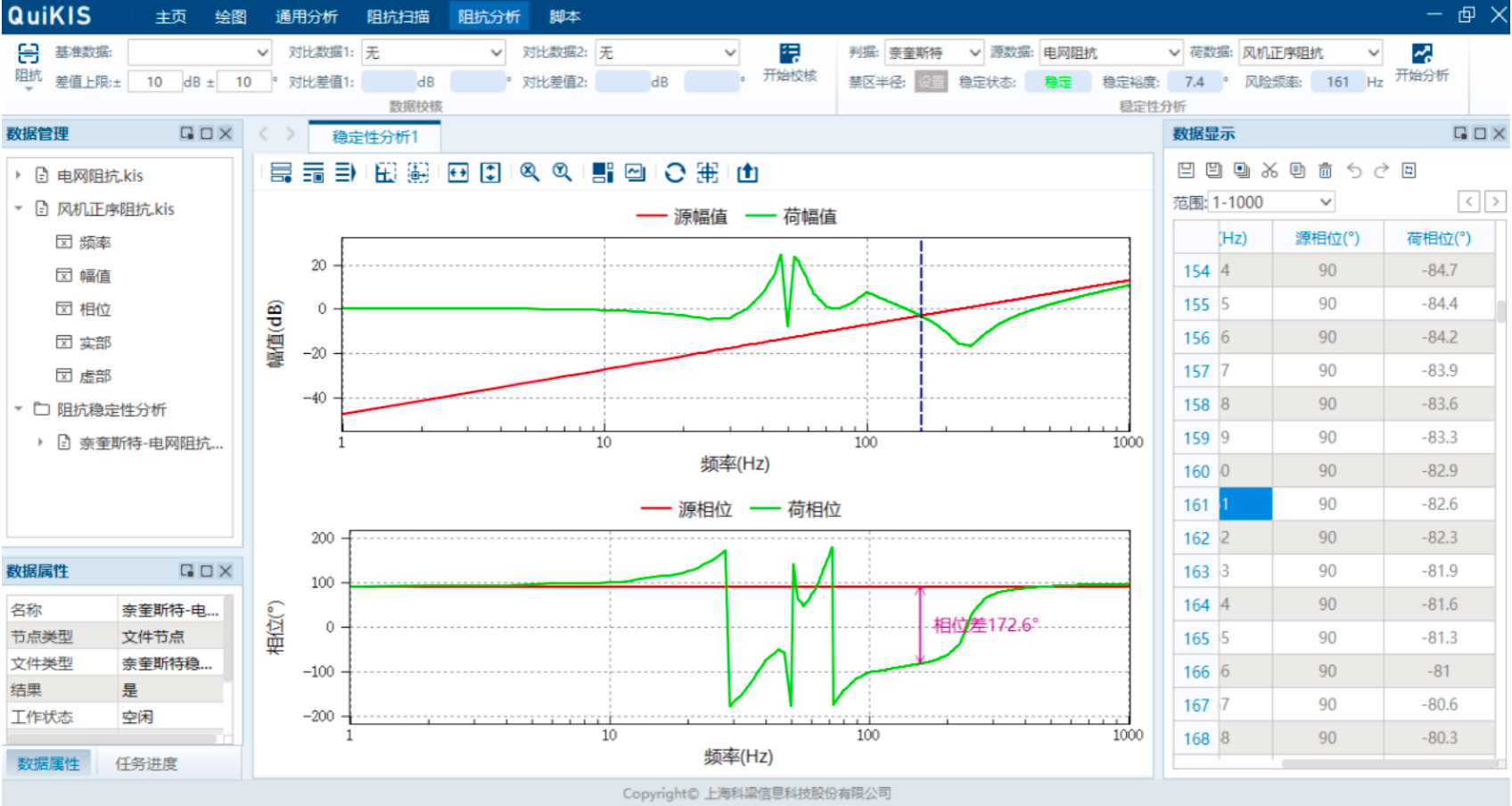
n Impedance Stability Analysis
This analysis enables qualitative and quantitative assessment of source/load impedance data stability using either the Nyquist Criterion or Maximum Peak Criterion. Quantitative metrics include stability margin and risk frequencies. The Maximum Peak Criterion allows setting exclusion radii on a per-frequency-band basis and generates Nyquist plots of the source-load impedance ratio.
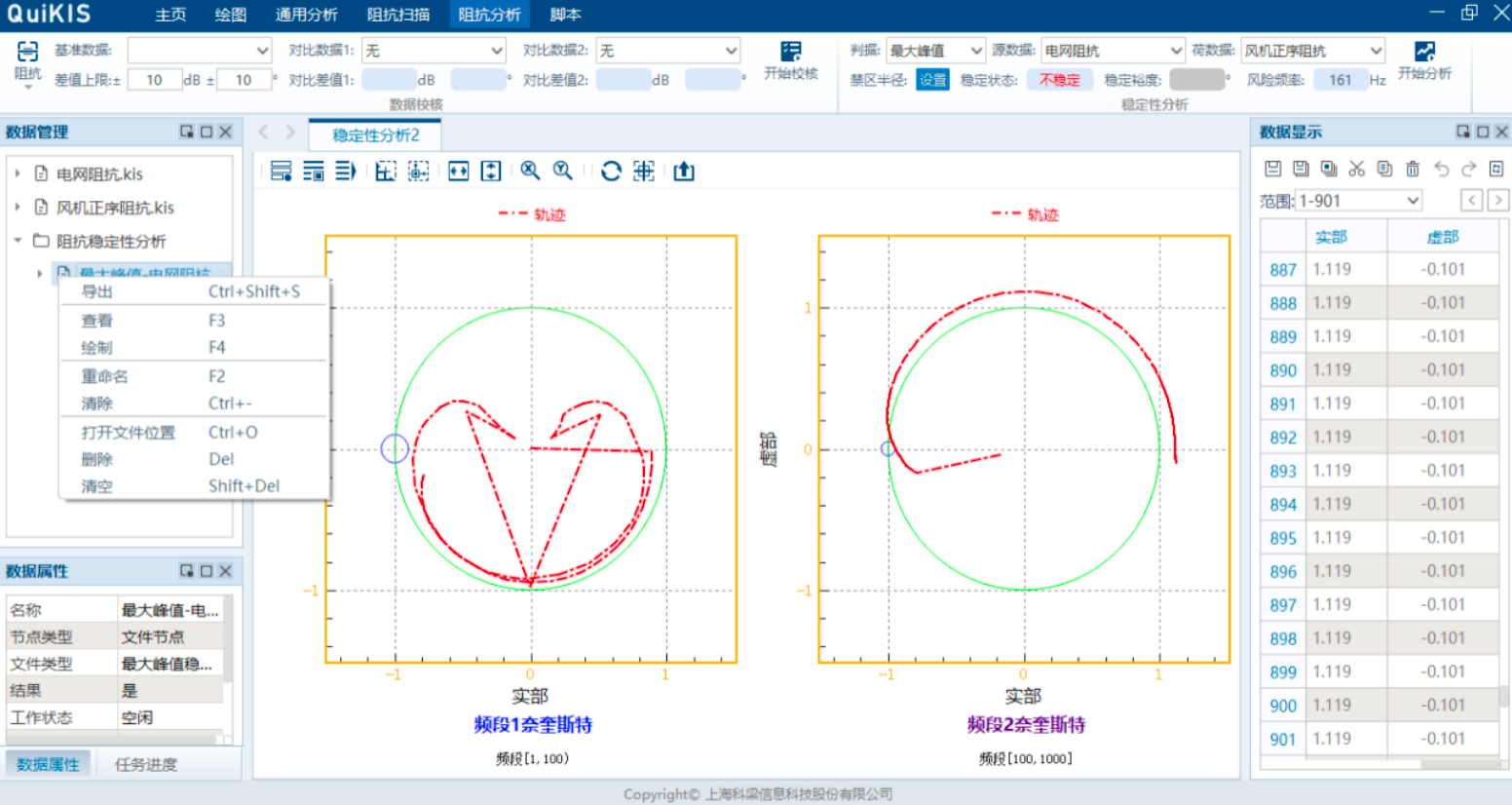 Maximum Peak Criterion
n Script
It supports script management, editing, running, and debugging, provides basic functions, and supports loading custom functions. It can be used for the calculation and output of impedance/admittance transfer functions and data files.
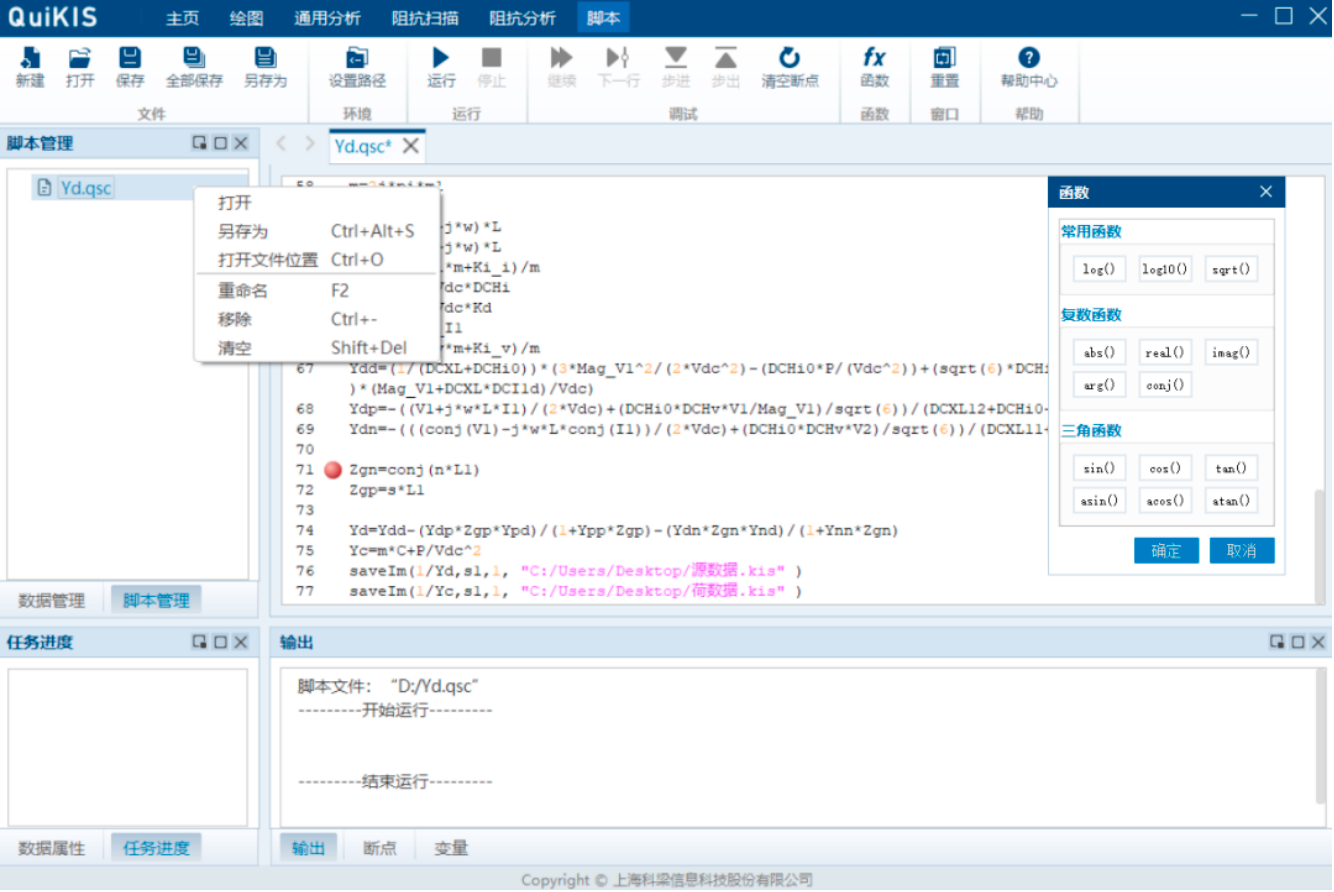 Script